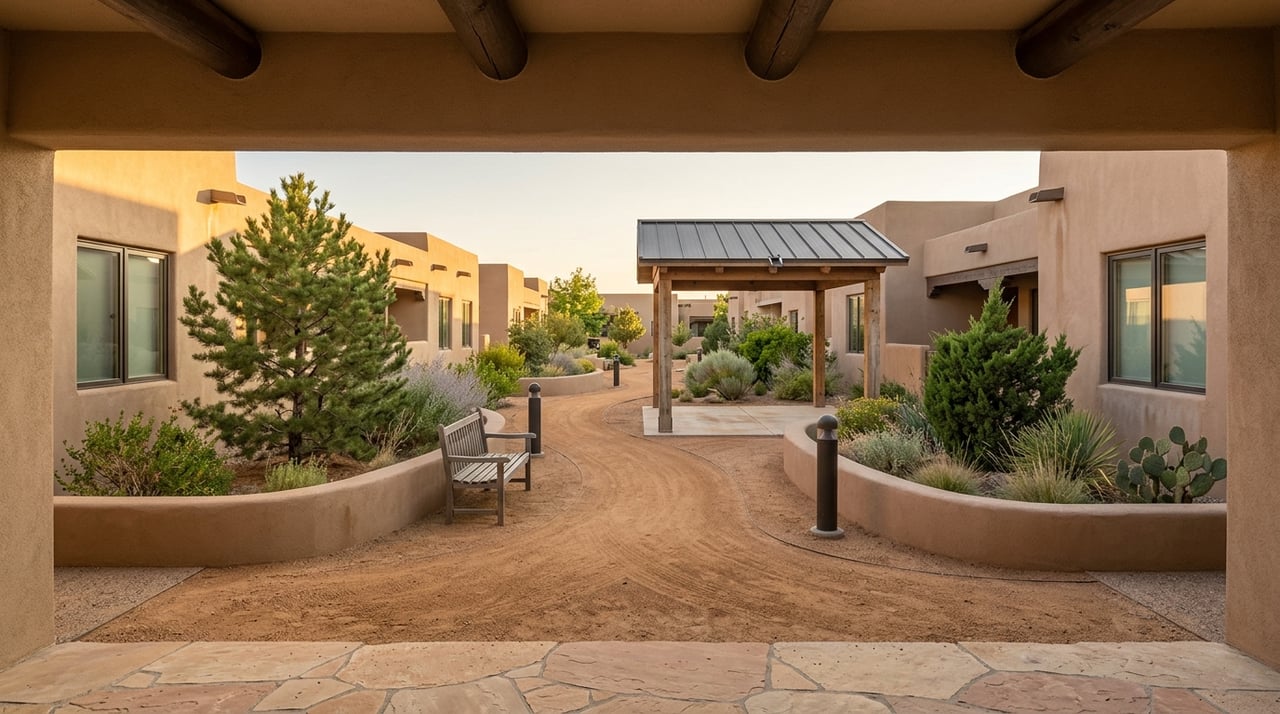
Two lofts sit on the same block in the Railyard. Both are two bedrooms, both have concrete floors and steel-framed windows, both list for roughly the same price. A buyer puts an offer in on one and closes in five weeks with a standard 30-year fixed loan. The other buyer's lender comes back three weeks into underwriting and says the building doesn't qualify for that loan at all. Same neighborhood, same style of home, two completely different financing paths.
The difference isn't the buyer's credit or income. It's what's on the ground floor of the building.
A District Built to Mix Uses on Purpose
The Railyard isn't an accident of zoning the way some mixed-use pockets in older cities are. The City of Santa Fe bought the 50-acre former rail yard in 1995 with bridge financing help from the Trust for Public Land, ran it through a community planning process, and the City Council approved a master plan in 2002. The district opened in its current form in 2008, built from the start to layer galleries, a farmers market, retail, and residential lofts inside the same buildings rather than separating them into different blocks.
That layering shows up in the building stock today. The ArtYard building is a clean example: commercial and retail space occupies the ground floor while live/work lofts sit above it. The Farmers Market building runs on a similar hybrid model, with the Farmers Market Institute occupying part of the space and leasing the rest to tenants like Second Street Brewery. Not every Railyard building works this way. The Twisted Cow Compound's final phase added four residential condominiums with no ground-floor retail mixed in, which makes it a much simpler case for a lender to look at.
That inconsistency, building to building, is the whole story. It's also the part no lifestyle guide to the neighborhood mentions, because it doesn't matter until you're sitting across from an underwriter.
The 25 Percent Line
Here's the mechanism. Fannie Mae and Freddie Mac, the entities that buy most conventional mortgages from lenders, have rules about what makes a condo project eligible for that kind of loan. One of the standard tests looks at how much of a building's square footage is used for commercial purposes rather than residential. Once a building's commercial space runs past roughly a quarter of the total, it typically fails that test and the project gets classified as non-warrantable.
The logic behind the rule isn't arbitrary. A building that depends partly on commercial tenants carries different risk than one that's purely residential: retail vacancies, business turnover, and shared insurance and maintenance costs between commercial and residential owners all complicate how a lender predicts what happens if a borrower defaults. Fannie and Freddie built the threshold to keep that risk out of the loans they buy and guarantee.
For a buyer, the practical effect is simple and unwelcome. A non-warrantable finding doesn't mean the building is unsafe or a bad investment. It means the conventional 30-year fixed loan you were planning around isn't on the table for that specific address, and you need a different kind of financing to close.
Why It Matters Which Building You're In
This is where knowing the Railyard's actual building stock, not just its reputation, starts to pay off.
| Building type | Ground-floor use | Likely financing path |
|---|---|---|
| ArtYard-style live/work loft buildings | Commercial retail or gallery space on the ground floor, residential lofts above | Often non-warrantable; expect non-QM or portfolio loan discussions |
| Twisted Cow Compound and similar all-residential condo projects | Fully residential | Typically eligible for conventional financing |
| Railyard Flats and comparable apartment buildings | Rental units, not offered for individual sale | Not applicable; these aren't purchasable as condos |
The point of this table isn't that one type of building is better. It's that the label "Railyard condo" or "Railyard loft" tells you almost nothing about which financing conversation you're about to have. You have to look at the specific building.
What This Costs You in Practice
When a building comes back non-warrantable, your options narrow. Conventional lenders generally step aside, and you're left choosing between a non-QM loan, a portfolio loan held by a smaller bank or credit union, or paying cash. Those alternatives usually come with a larger down payment requirement, a shorter list of lenders willing to underwrite the deal, and terms that don't match what you priced out when you got pre-approved for a standard mortgage.
None of that shows up in a listing description. It shows up when your lender pulls the condo questionnaire, usually well after you've written an offer and started counting down an inspection period.
What to Ask Before You Write the Offer
A few questions, asked early, save weeks of friction later:
- What percentage of the building's total square footage is commercial versus residential? Ask the HOA or condo association directly for this figure.
- Has your lender pulled or requested the condo questionnaire for this specific building, not just a general Railyard comparison?
- How old is the HOA's budget, and has it been updated in the last year? Outdated budgets are a separate reason lenders decline to warrant a project.
- What share of units in the building are owner-occupied versus rented? High investor concentration is its own red flag for conventional financing, apart from the commercial-space question.
- Is the building currently involved in any HOA litigation over structural issues or maintenance disputes?
Getting answers to these before you're deep into a purchase contract means you choose your financing strategy on purpose instead of discovering it by accident.
A Few Blocks Changes Everything
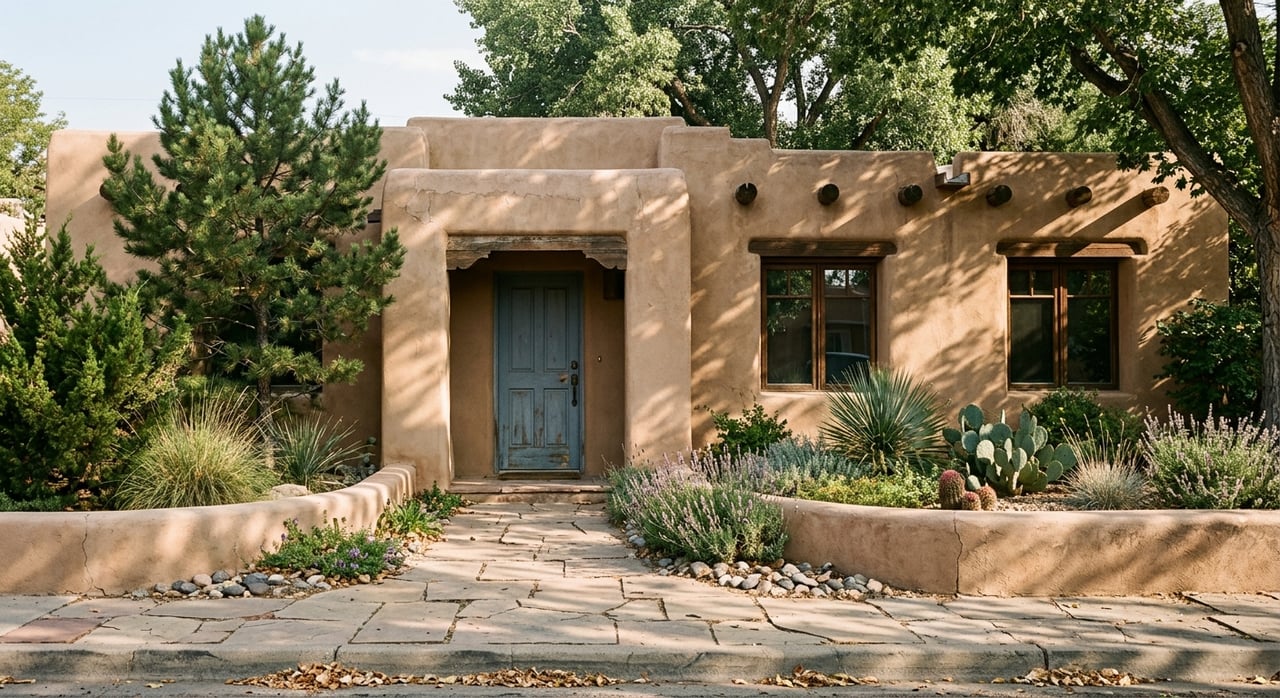
Walk east from the Railyard proper, across toward the Santuario de Guadalupe, and the building stock changes entirely. The Guadalupe Historic District, long described as the northern end of El Camino Real, is made up largely of renovated adobe homes, bungalows, and small compounds held as fee-simple single-family property rather than condominium ownership. There's no HOA to review, no condo questionnaire to request, and no commercial-space percentage for a lender to calculate, because the ownership structure itself is different.
That means the financing conversation for a historic Guadalupe adobe and a Railyard live/work loft can be completely different exercises, even though both addresses fall inside what people commonly call the same neighborhood. The dividing line isn't just architectural style. It's ownership structure, and it maps almost exactly onto the boundary between the historic streets and the redeveloped rail district.
Santa Fe's broader market context helps explain why this distinction is worth sorting out early rather than late. Citywide, homes were selling after a median 57 days on the market as of July 2026, with 322 homes sold that month. Inventory in a compact district like the Railyard is smaller than that citywide picture suggests, which means fewer comparable sales for an appraiser to work with and less room to recover if a financing surprise costs you your first-choice unit.
A Few Questions Worth Asking Directly
Does this affect every condo in the Railyard? No. Buildings without significant ground-floor commercial space, like the residential-only Twisted Cow Compound, are typically straightforward for conventional financing. The concern applies specifically to live/work and mixed-use buildings where retail or gallery space shares the structure with residential units.
Can I still buy a non-warrantable condo? Yes. You'll just be shopping for a non-QM loan, a portfolio loan through a smaller local lender, or planning to pay cash, rather than a standard conventional mortgage. Terms vary by lender, so it's worth having that conversation before you're under contract.
How early should I find this out? Before you write an offer, if possible. Ask your agent to help you request the building's condo questionnaire and commercial-use breakdown, and have your lender confirm in writing whether the specific building is likely to qualify for conventional financing.
Buying in the Railyard means reading a small, specific inventory correctly, building by building, not neighborhood by neighborhood. If you're weighing a live/work loft against a historic adobe a few streets over, or trying to figure out which Railyard buildings will actually finance the way you expect, The Santa Fe Realtors can walk the building-level details with you before you're locked into a contract.
Talk to a Santa Fe neighborhood expert.